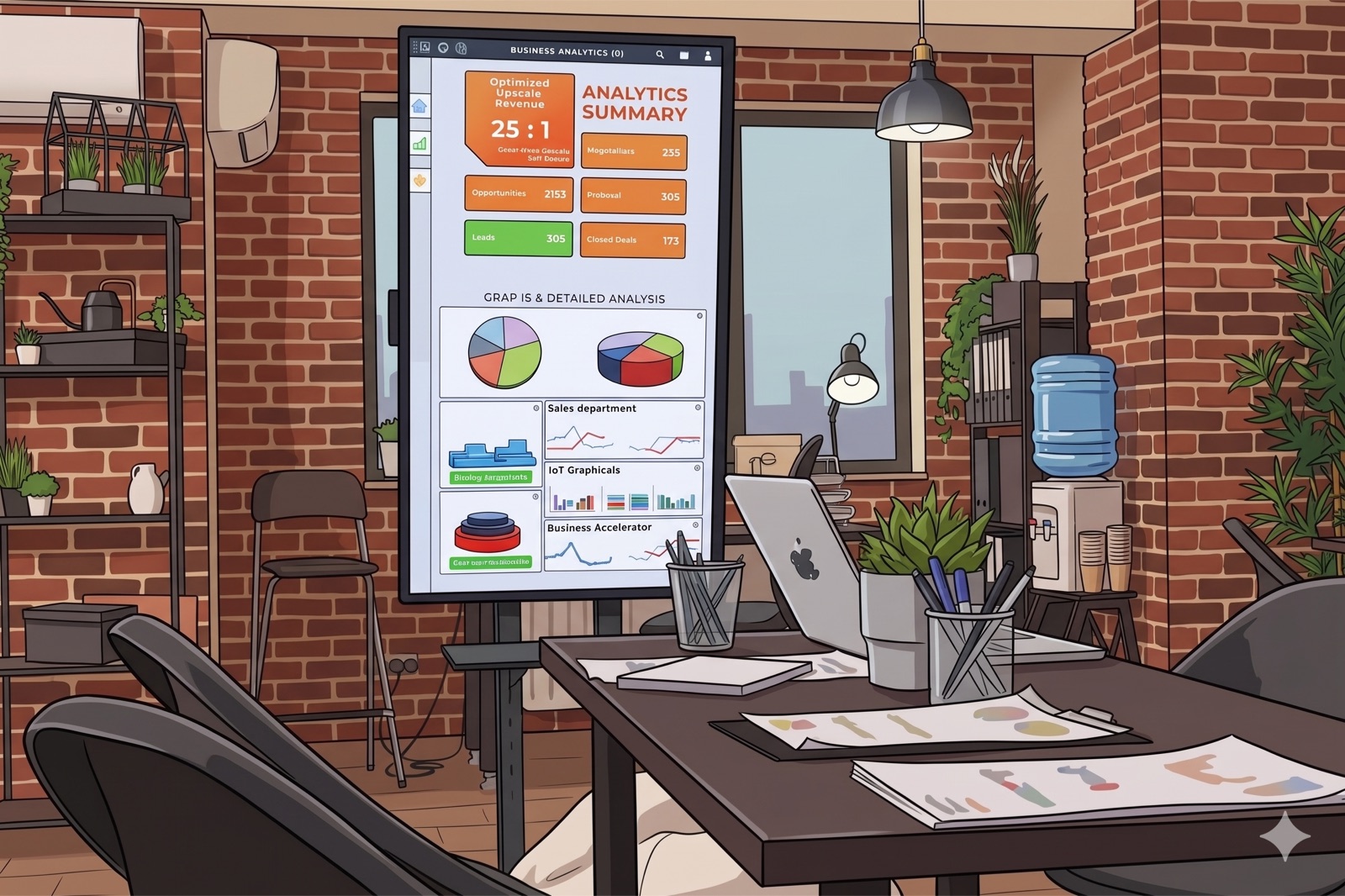
AI has changed almost every step of the outbound engine. Data enrichment tools pull firmographic and intent signals, so a campaign starts with the right people instead of a generic list. AI then helps draft the first version of a message, suggests subject lines, and flags which prospects are most likely to respond based on signals like funding rounds, job changes, or website visits.
None of this means the work becomes "set and forget." The agencies that get real results still have a human review every message, tighten the messaging, and optimize sequences weekly based on analytics rather than letting AI run unsupervised. Teams that blend AI speed with human judgment tend to see meaningfully better reply rates than those running fully automated sequences from end to end.
Why B2B Teams Need Outbound Sales in 2026?
Inbound is a long game.Outbound sales gives B2B teams a way to start qualified conversations now, while content and SEO compound quietly in the background. Heading into 2026, buyers are pickier, inboxes are louder, and a sloppy outbound motion gets ignored fast; but a well-run one still books meetings, fills the calendar, and helps businesses grow even in slow-moving markets.
Targeted Outbound Campaigns That Build Pipeline
A targeted outbound campaign starts with a clear picture of the buyer: industry, company size, tech stack, and the pain points that make your product relevant right now. From there, it typically runs across email and LinkedIn in parallel, with appointment setting layered in once a prospect engages.
Good b2b marketing teams treat this as part of the broader sales process; every qualified lead it generates should move cleanly into existing sales cycles instead of creating extra work for reps.
This is also where lead generation pays for itself. When it's done right, reps spend their time on sales calls with warm, relevant prospects instead of cold dialing for hours with nothing to show for it. A sequence that's tightly targeted at the start almost always converts better than one that tries to reach everyone at once.
Some industries lean on this more than others:
- SaaS and IT services companies tend to have shorter sales cycles and clearer buying signals, which makes targeted outbound especially effective.
- Professional services and agencies often see slower but steadier results, since trust plays a bigger role in the decision.
- Manufacturers and other companies with long, multi-stakeholder deals usually need outbound paired with account-based research, since one or two touches rarely move a six-figure decision forward on their own.
Email and LinkedIn Outreach at Scale
Email and LinkedIn outreach remain the backbone of most outbound programs, and for good reason, they're inexpensive to run, easy to test, and don't require a prospect to pick up the phone. The agencies that do this well treat LinkedIn as a relationship channel, not a numbers game: a connection request, a comment on a prospect's post, then a direct message that references something specific about their business.
Combine that with a tightly sequenced email marketing cadence to run LinkedIn outreach at scale without sounding like a bot farm. The real goal isn't volume for its own sake; it's enough relevant touches, on enough of the right channels, that a busy buyer notices and responds.
How to Choose the Right Agency and Outsource With Confidence?
Not every business needs to outsource outbound, but most growing B2B teams reach a point where building, training, and retaining an internal SDR bench costs more than it's worth.
That's when marketing agencies and specialist outbound agencies start showing up in vendor searches, and when it pays to know how to choose the right outbound partner, one that will actually help you reach decision-makers who'd never find you through a search engine alone.
The agencies and freelancers in this space range widely in quality, so finding the right agency takes more than a quick search and a sales call.
Questions to Ask Before You Sign With an Outbound Agency
- Does the agency specialize in outbound for your specific industry, or run the same playbook for everyone?
- Is their targeting data-driven, or do they simply buy a list and blast it?
- Will their reps integrate with your CRM and sales operations, or operate as a black box you can't see into?
- Will they support your internal sales team with sales enablement, call scripts, objection handling, and messaging guides?
- How does the agency handle brand safety, given they'll be running outreach under your domain and your name?
A Few Green Flags Worth Noticing
- A good outbound partner is upfront about ramp time instead of promising meetings in the first week.
- They'll show you a sample sequence before you sign, not after.
- They'll tell you plainly which industries they've actually worked in, rather than claiming expertise across every vertical at once.
- They'll let you keep ownership of your sending domains, your contact data, and your CRM records, so nothing walks out the door if you ever decide to switch partners.
None of this guarantees great results on its own, but its absence is usually a warning sign worth paying attention to before any contract gets signed. A quick reference call with a current client often reveals more in ten minutes than another week of vendor demos.
What Data-Driven Outbound Actually Looks Like?
Data-driven outbound isn't just a buzzword agencies use in pitch decks, it's the difference between a strong outbound motion and a campaign that burns through a list and produces nothing. A real outbound engine pulls in firmographic data,intent signals, and CRM history before a single message goes out, then routes results back into targeting so the next batch of outreach is sharper than the last.
The agencies that run the best outbound programs help b2b teams treat it less like a one-off project and more like one of several connected sales motions working alongside marketing and customer success. The goal isn't to help companies send more messages. It's to help them have better conversations with fewer, more relevant ones.
Personalization and Message Optimization
Personalization is where most campaigns fall apart. Swapping in a first name and company name is just a mail merge, not real customization. Referencing something specific, a recent product launch, a hiring spree, a comment made in a webinar, is what actually gets a response.
Message optimization should be a constant process, with agencies A/B testing subject lines, opening lines, and calls to action on a rolling basis rather than writing one sequence and leaving it untouched for months.
Analytics, ROI, and Reporting
Ask any outbound marketing agency how they prove ROI before you sign a contract. The good ones share dashboards with open rates, response rates, meetings booked, and pipeline generated — not just "activity" numbers like emails sent. Analytics should tie back to actual revenue impact, and optimization decisions should be made from that data weekly, not quarterly.
What Does Pricing Usually Look Like?
| Pricing Model | What It Typically Means |
|---|---|
| Flat monthly retainer | Predictable cost; ranges from a few thousand dollars a month for a lean, single-channel setup to well into five figures for a multi-channel program with several reps and senior strategy support |
| Per meeting booked | Cost tied directly to results rather than activity |
| Per dedicated SDR seat | Cost scales with the headcount assigned to your account |
Lower-cost options usually mean higher volume and lighter customization; higher-cost ones usually buy you more research, tighter targeting, and a team that treats your brand like its own.
Price alone rarely tells you whether an agency is good. Ask what's included at each tier, and how quickly you can adjust the plan if early results miss the mark. A fair contract should also spell out what happens after the initial term, including notice periods and who keeps the data once the engagement ends.
How B2B Teams Are Solving Outbound?
So how do teams actually get outbound done in 2026? Most fall into one of three camps, and each comes with real tradeoffs worth understanding before committing a budget to any of them.
The Traditional Options: In-House Teams and Outbound Marketing Agencies
Building in-house means hiring SDRs, training them on outbound sales development from scratch, and managing tools, lists, and messaging yourself. It gives you full control, but it's slow to ramp and expensive to keep staffed once turnover hits. On the other side, an outbound marketing agency takes the execution off your plate entirely; list building, message writing, sending, and qualification, for a monthly retainer.
Some companies position this as a stopgap until they can hire in-house, while others stick with the model long-term. The agencies and freelancers in this space range widely in quality, and finding the right agency that fits your industry and budget takes real diligence.
A good outbound agency helps when speed matters more than building internal capability, but you're trading some control and visibility for convenience, and running an agency search the wrong way can mean months lost to a partner that isn't a fit. It's worth comparing a few outbound strategies side by side before locking in a full quarter of budget on any single path.
Why AI-Powered Platforms Are Changing the Outbound Game in 2026
A newer category sits between those two options: platforms that pair automation with dedicated human support. Instead of choosing between full control and full outsourcing, teams get AI handling the scale work; research, message writing,multi-channel sequencing, data enrichment, deliverability, while a real human still manages the relationship-heavy parts: objection handling, warm calls, and meeting follow-up.
This has become one of the fastest-growing categories of outbound partners heading into 2026, and outbound marketing agencies in 2026 are increasingly building automation into their own workflows just to keep pace with platforms built AI-native from day one.
Ask five teams what the best outbound marketing approach looks like, and you'll get five different answers, but even the best outbound marketing agencies are leaning in the same direction. B2B companies that want to work with an outbound platform instead of a traditional retainer now have a real, proven alternative.
ReachIQ: AI Does the Outreach. Humans Close the Loop
This is the gap ReachIQ was built to close. ReachIQ is an outbound platform for companies that want qualified meetings, not just more contacts in a spreadsheet; and it's deliberately not a traditional outbound marketing agency, and not a fully autonomous AI persona pretending to be a person either.
The automation side does the heavy lifting. ReachIQ's writing model is fine-tuned on 25 million real B2B emails, so opening lines reference an actual signal, a funding round, a hiring spree, a recent product launch; instead of a name dropped into a merge field, and the company reports roughly a 6x lift in reply rates from this kind of message quality compared to templated outreach.
- ICP matching scores every contact from 0 to 100 against your defined criteria, so outreach goes to the right people instead of a generic list.
- A built-in database of 10M+ verified B2B contacts means lead generation doesn't start from zero.
- Automated sequences time each email, LinkedIn touch, and call to when a specific prospect is most likely to respond.
- A native CRM keeps every contact, account, and pipeline stage in one place rather than spread across separate tools running disconnected marketing campaigns.
The human side closes the loop. Every account gets a named, dedicated SDR, a real person you interview and choose, not a chatbot, who handles objections, picks up the phone for the conversations worth having live, and briefs your AE before every meeting. B2B SaaS companies, staffing and recruiting firms, fintech, and healthtech teams can run this as a fully managed, done-for-you motion with a dedicated SDR live within weeks, or use the platform themselves if they already have a team in place.
Either way, the goal stays the same: help b2b teams turn outreach into a pipeline of qualified meetings, not just more activity to report on at the end of the month.
Common Questions
How is this different from hiring an agency?
A traditional agency runs outbound for you, but visibility into targeting, messaging, and account ownership often stays with them. ReachIQ keeps that data and reporting in your hands while still providing a dedicated SDR to run the day-to-day work.
How is this different from a fully autonomous AI BDR?
Fully autonomous tools replace the rep with a persona end-to-end. ReachIQ pairs AI for the research- and volume-heavy work with a real human SDR for judgment calls; objections, relationship nurturing, and meeting prep, because that part of the sales process still benefits from a person, not a script.
How quickly can a team see results?
Most done-for-you programs are live sending within the first month and booking qualified meetings by month two, once ICP, messaging, and sender infrastructure are in place. Self-serve setups can be sent from an inbox within an hour of signing up.
Final Verdict
Whether a team calls its provider a top outbound agency, an AI platform, or a fractional SDR bench, the goal should always be to help businesses land qualified meetings, not just generate more activity.
Outbound, run well, still helps b2b companies grow a predictable pipeline without waiting six months for inbound to kick in, and increasingly, doing it well means pairing AI with the right human touch rather than choosing one over the other.