Most reps will tell you the hardest moment of the day isn't the pitch. It's the half-second of silence right before it, when you're not sure if the person on the other end is about to hang up.
Outbound sales live in that half-second. It's the work of reaching out to potential customers who have never raised a hand, who don't know your name yet, and turning a cold start into a real conversation. Get it right, and you fill a pipeline faster than almost any other motion. Get it wrong, and you're just noise somebody forgets by lunch.
This guide covers what outbound sales is, how the process actually runs, the strategies that still convert, and where AI has started doing the heavy lifting. Maybe you're standing up an outbound team for the first time. Maybe you want to refine your outbound sales motion that's gone a little flat. The fundamentals below hold up either way.
What Outbound Sales Actually Means?
Outbound sales refers to the process of your company making the first move. Rather than waiting around, a sales rep identifies people who fit the profile and contacts them directly. There's no inbound form fill to respond to. You decide who's worth talking to, then you go talk to them.
Said another way, outbound sales is the process of finding potential customers, reaching them through channels like cold calling, cold email, and social selling, and guiding them toward a buying decision. At its core it's a proactive sales approach. Outbound sales is a proactive motion where you go to the buyer instead of hoping the buyer wanders over to you. That single idea, the one where sales is a proactive sales effort rather than a reactive one, shapes everything that follows.
Outbound vs. Inbound Sales
The cleanest way to understand outbound is to hold it next to its opposite.
Inbound sales is a sales strategy built on pull. You publish content, rank in search, run ads, collect referrals, and inbound leads show up already curious. The rep's job is to respond to interest that already exists. The buyer started the conversation, which makes the whole exchange feel warmer from the first hello.
Outbound flips the direction. Unlike inbound sales, nobody's waiting in your inbox. You start the conversation cold. That difference shapes everything downstream, from the tone of a first message to how you measure success. Inbound rewards patience and a strong brand. Outbound rewards precision and persistence.
Here's the part most people miss, though. Smart teams don't pick a side. They run inbound and outbound sales together, because the two feed each other. Inbound tells you which messages resonate. Outbound lets you test those messages on the exact accounts you want, instead of whoever happened to find you. Plenty of sales leaders now treat inbound sales and marketing as the warm-up act and outbound as the way to land the accounts that actually move the number. When marketing and sales share signals like this, both sides get sharper.
How Outbound Sales Works?
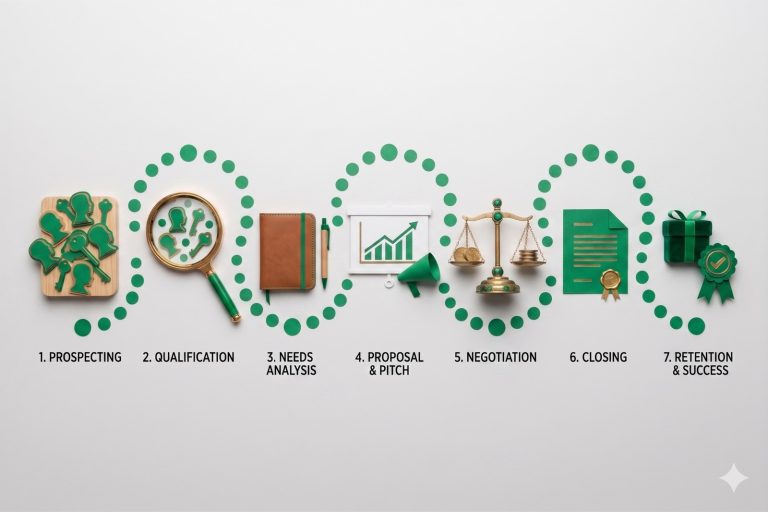
Here's the short version of how it works. You define who you're after, build a list, reach those people across a few channels, qualify the ones who bite, and move them through the sales cycle until they buy or clearly won't. Simple to describe, hard to do consistently.
The big benefit is control. Inbound traffic comes and goes with your content calendar and the mood of a search algorithm. Outbound gives you a dial. Need more sales opportunities next quarter? Add reps, add accounts, add touches. That predictability is one of the main benefits of outbound sales, and it's exactly why founders lean on it before their brand is big enough to pull demand on its own.
There's a cost, of course. Outbound takes effort and patience, and a chunk of the people you contact will never reply. That's the job, not a sign you're failing at it. The teams that win treat each "no" as data, not as a personal insult.
Types of Outbound Sales
There isn't one flavor of outbound. The common forms of outbound break down roughly by channel and motion. Cold calling reaches people by voice. Cold email reaches them by inbox. Social selling reaches them where they already scroll. Then there's event-based outreach, referral prospecting, and account-based plays aimed at a short list of dream logos.
Most outbound sales activities fall into one of two buckets: finding the right people, and starting a relevant conversation with them. The channel changes, but those two jobs never do. A rep who's great at outbound prospecting but terrible at the conversation will book nothing, and the reverse is just as true.
Who Should Use Outbound Sales?
Not every company needs outbound on day one, but most reach a point where they do. A young startup with a tiny audience can't wait for inbound to build, so an outbound sales team becomes the fastest path to a first wave of revenue. A sales team chasing enterprise logos needs it too, because the biggest buyers rarely fill out a contact form on a whim.
Outbound strategies also shine when you're entering a new market or launching a product nobody's searching for yet. Demand doesn't exist, so you go create it. Outbound sales teams in that spot aren't waiting for a prospect to discover them. They're picking the exact accounts that fit and starting the conversation on purpose.
The teams that get the most from outbound usually share one trait: a clear definition of who they serve. When you know your prospect is cold, every message gets sharper and your conversion improves. A vague target produces vague outreach, and vague outreach gets ignored. So before a single dial goes out, a smart sales team agrees on exactly who's worth the effort and who isn't.
The Outbound Sales Process, Step by Step
Every reliable outbound sales process moves through the same stages. Tools change, scripts change, but the bones stay put. Run through these in order and your outbound sales efforts stop feeling random.
Step One: Build an Ideal Customer Profile
Everything starts here. Your ideal customer profile is the description of the company and person most likely to buy, stick around, and tell a friend. Industry, company size, role, and the pain points they feel at 2 p.m. on a Tuesday. The more specific, the better.
Skip this step and you'll burn weeks talking to people who were never going to buy anything. A sharp profile is what separates targeted b2b outbound from spray-and-pray. It also keeps your team honest, because a tight definition makes it obvious when a deal is a stretch.
Step Two: Prospecting and List Building
With a profile set, sales prospecting begins. This is the hunt for real names and accounts that match the description. Reps pull from LinkedIn, data tools, intent signals, event attendee lists, and good old-fashioned research.
The goal of this stage is a clean list of outbound leads worth contacting. Quality beats quantity every single time. A list of 50 genuinely good-fit prospects will out-earn a list of 5,000 random ones, and your outbound sales reps need that focus to stay sane. Nobody does their best work staring at a spreadsheet of 10,000 strangers.
Step Three: Outreach and the First Touch
Now you reach out to potential customers. This is the visible part: the cold calling, the cold email, the LinkedIn note. Your sales pitch here is not a monologue about your features. It's a short, specific reason this particular prospect should care, tied to a problem they already have.
The best opening earns the next thirty seconds. Nothing more. A sales call that tries to close on the first touch usually closes nothing. Think of the first message as the trailer, not the whole movie.
Step Four: Qualify, Then Close
Replies start landing. Some are polite brush-offs, some are real interest. Qualifying sorts them out. You confirm the prospect actually has the problem you solve, the budget to fix it, and the authority to say yes. A friendly maybe from someone who can't sign anything isn't progress.
Qualified prospects move into the back half of the sales funnel, where an account executive runs demos, handles objections, and works toward signature. Clean handoffs between the rep who booked the meeting and the closer keep your sales pipeline from leaking deals at the worst possible moment.
Outbound Sales Strategies and Tactics That Convert
There's no single best channel for everyone. The strongest outbound sales strategies stack a few together so a prospect hears from you in more than one place. Here are the core outbound sales tactics worth knowing, plus how to run each one without becoming the reason someone mutes notifications.
Cold Calling
Cold calling refuses to die, and there's a good reason for that. A live human voice cuts through a full inbox in a way no email can. The catch is preparation. Know who you're calling, why you're calling them specifically, and what you'll say in the first ten seconds before you've earned anything.
Outbound calling works best when you stop reading a script word for word and start having a conversation. Ask a real question early. Let them talk. The rep who listens books more meetings than the rep who recites a wall of text at full speed. People can hear a script, and they tune it out instantly.
Cold Email
Cold email scales in a way calls simply can't, which is both its blessing and its curse. A great cold email is short, personal, and about the reader rather than you. One clear idea, one clear ask, and an exit that doesn't guilt anyone into replying.
Sales email templates help you move fast, and that's fine, but a template is a starting point rather than the finished message. Swap in a real detail about the prospect's company and your reply rate climbs. Send the exact same generic blast to 2,000 inboxes and you've built a very efficient spam machine, which is not the goal.
Timing matters too. Tuesday and Wednesday mornings tend to land better than Friday afternoon, when half your list is already mentally at the lake. These small outbound sales techniques add up across a quarter.
Social Selling
Social selling means building real relationships on the platforms where your buyers already spend time, usually LinkedIn for b2b sales. You comment on their posts, you share useful things, and you message without pitching on the very first hello.
Social selling is slower than a cold call, sure, but it warms accounts before you ever ask for time. A prospect who has seen your name three times in their feed answers the phone very differently than a total stranger does. Done patiently, social selling turns cold outreach into a follow-up rather than a first impression.
Multi-Channel Sequences
The real magic is combining all of the above. A sequence might open with a connection request, follow with a cold email, then a call, then another email that references the call. Five to eight touches spread across a couple of weeks.
This is where sales engagement platforms earn their keep, scheduling touches so nothing slips through the cracks and reminding reps who to chase. Mixing channels respects that people respond to different things. Some answer email, some pick up the phone, some only notice you on LinkedIn. Layering them is one of the most effective outbound sales strategies for getting noticed without nagging, and it's a habit shared by nearly every strong outbound team.
Writing Messages That Earn a Reply
The message does most of the work, and most messages fail for the same boring reason: they're about the sender. A prospect doesn't care about your funding round or your feature list. They care about a problem they're already losing sleep over.
Open with them, not you. Reference something real, a recent hire, a job posting, a comment they left, a change at their company. That one detail signals you did the homework, and it's the difference between a reply and the trash folder.
Keep the task small. A first message that demands a 45-minute demo asks far too much from someone who barely knows you. Ask for a quick reaction, a yes-or-no, or a pointer to the right person instead. Small asks get answered, and an answered message is the start of a relationship.
Then write like a human. Drop the corporate fog. Read your draft out loud, and if you'd never say it to someone across a table, cut it. The brands winning at outreach right now sound like a helpful colleague, not a press release.
Follow-ups deserve the same care. A nudge that just says "bumping this" wastes everyone's time. Add a new angle each touch, a fresh stat, a different pain point, a quick case study, so every message gives the prospect a fresh reason to reply rather than a reminder to feel guilty.
One last word on volume. A short, sharp note to 40 well-chosen prospects beats a polished essay blasted to 4,000. Tighter targeting lifts your conversion and protects your domain reputation, which matters more every year as inboxes get pickier about what they let through.
Measuring, Mistakes, and Best Practices
You can't fix what you don't measure. The teams with the best results obsess over a handful of numbers and politely ignore the rest. This is also where disciplined teams separate themselves from teams that just stay busy.
Outbound Sales Metrics That Matter
Start with these core numbers. Activity per rep (calls, emails, total touches). Reply and connect rates. Meetings booked. Conversion rate from meeting to opportunity to closed deal. And sales cycle length, because a fast pipeline beats a clogged one.
Watch where prospects drop out. Booking meetings but nothing converts? The problem is qualification or fit, not volume. No replies at all? Your message or your list is off, so don't just dial harder. Reading these key outbound sales numbers honestly is how you improve instead of guessing, and it's how managers decide where to coach.
Common Outbound Sales Mistakes
A few common mistakes show up on almost every struggling team. Pitching too early, before you've earned attention. Bailing after one or two touches when most deals live deeper in the sequence. Treating every account the same instead of tailoring the message. And measuring activity while ignoring conversion, which is how you end up with a very busy team and a very quiet pipeline.
The fix for all of them is the same: slow down on the strategy, speed up on the repetition.
Best Practices for Outbound Teams
A few best practices separate the teams that grind from the teams that actually grow.
Personalize the opening, automate the boring parts. Test one variable at a time so you know what moved the needle. Follow up more than feels comfortable, because most deals close on the fifth touch, not the first. Keep your list clean. Respect a no and move on without sulking.
And keep your messaging tight. Every extra sentence in a cold email is one more chance for the reader to bail. Good outbound efforts feel like a helpful nudge from someone who clearly did their homework, not a pop-up ad with a pulse. These habits aren't fancy. They're just consistent, and consistency is the whole game in sales development. The best outbound sales strategies are usually the ones a team can run every day without burning out.
How AI Is Reshaping Outbound Sales?
For most of its history, outbound was a numbers grind. More dials, more emails, more hours at the desk. That ceiling is lifting fast, because AI sales tools now handle the parts that used to eat a rep's entire morning. This is the biggest shift in outbound prospecting in a decade, and it changes the math on what a small team can do.
AI Sales and Automation
Sales automation already books meetings on autopilot, but the newer wave goes much further. AI can research an account, draft a personalized first message, pick the best time to send, and adjust based on who replies and who doesn't. That's a real jump in sales efficiency. It allows sales reps to skip the busywork and spend their hours on the work machines still can't do, like reading the room on a sales call or building genuine trust.
Used well, this kind of automation doesn't replace the human touch. It clears the clutter so reps focus on live conversations. The right outbound stack handles the grunt work and hands warm prospects to a person at exactly the moment a person matters. That's improved sales output without adding headcount, which is the dream for any team watching its budget.
Where AI SDRs Fit In?
This is the shift behind platforms built around AI SDRs and AEs. An AI SDR can run prospecting, build targeted lists, send personalized sequences across channels, and keep the cadence going without burning out at 4 p.m. on a Thursday. It scales outbound operations the way a whole bench of sales development reps would, minus the ramp time, the training drag, and the turnover.
The payoff is twofold. You speed up outbound dramatically, and you also get steadier results, because an AI doesn't have an off day or forget to follow up on touch four. Human sales professionals then focus on the high-value moments: the demo, the negotiation, the relationship that closes a six-figure deal. Using outbound automation this way turns one strong rep into the output of a small team.
This is where reachiq.ai sits. The point isn't to remove people from selling. It's to let sales representatives spend their time where they're genuinely irreplaceable and let software carry the repetitive layer that used to define the job. Teams that use outbound this way compete well above their weight class.
FAQs Related to Outbound Sales
What are the best practices for outbound sales?
Define a clear ICP, personalize at the segment level, and follow up consistently across channels. Track replies over volume, and keep your messaging short, specific, and built around the prospect's problem.
How to improve outbound sales strategies?
Tighten your targeting, test subject lines and openers, and cut sequences that go quiet. Platforms like ReachIQ surface which messages get replies, so you double down on what already works.
Can outbound sales be automated?
Yes, the repetitive parts can. Prospecting, sequencing, and follow-up run on autopilot, while reps handle live replies and closing. ReachIQ manages that front-end workload so your team focuses on conversations.
What are the components of an outbound sales strategy?
A defined ICP, a prospect list, multichannel sequences across email and LinkedIn, follow-up cadences, and clear handoff to reps. Measurement ties it together so you know what's working.
Is AI effective for lead generation in sales?
Yes. AI builds targeted lists, scores intent, and runs outreach at a scale humans can't match manually. The result is more qualified conversations without adding headcount to your team.
What challenges exist in AI-driven sales?
Generic messaging, data quality issues, and over-automation that feels robotic. AI works best with human oversight on tone and targeting, so outreach stays relevant rather than spammy.
The Bottom Line
Outbound sales is still one of the most direct ways to grow, especially when you can't yet rely on inbound to fill the gap. The formula hasn't really changed: know exactly who you're targeting, reach them across a few channels with a message that respects their time, qualify hard, and measure everything that matters.
What has changed is how much one person can do. A single rep backed by good tooling now does what a small team used to, which makes successful outbound sales possible for companies that could never have afforded a ten-person floor of dialers. Pair a disciplined outbound sales process with AI that handles the repetitive layer, and a lean team competes with a much larger one.
So start with the basics. Pick your channels, write a message you'd actually want to receive, and give it enough time to work. Don't judge the whole motion off a quiet first week, because outbound rewards the teams that keep showing up.
Then explore the benefits of outbound that compound once the system is humming, and let the right tools accelerate outbound from there. The teams that build successful outbound on solid fundamentals, then add AI on top, are the ones pulling ahead right now. Everyone else is still measuring activity and wondering why the pipeline looks the same.