
The SDR Role: A Simple Explanation
I have attended a lot of sales team meetings and there’s one thing that keeps getting swept under the rug. A lot of people in those meetings don’t really know what a sales development representative (SDR) does. They know the acronym. That’s about it.
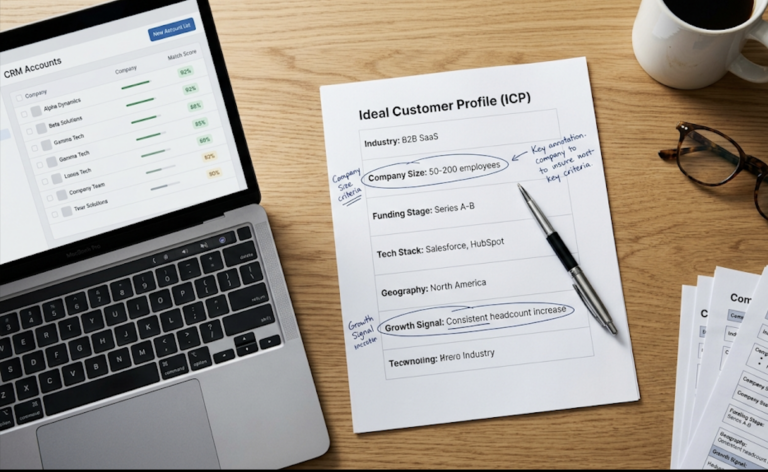
So let me break it down. An SDR finds potential customers, reaches out to them, and determines if they’re worth talking to. If they are, the SDR hands them over to someone who can close a deal. That’s the job.
The Day-to-Day of an SDR
SDRs don’t close deals or negotiate contracts. Their daily tasks include working through a list of target accounts, sending outreach emails, and following up with people who don’t respond. It’s a tough job, as most days are filled with rejection.
The SDR’s primary output is meetings, also known as sales qualified leads (SQLs). They create opportunities for account executives (AEs) to take over and close deals.
SDR vs BDR: What’s the Difference?
There is a difference between SDRs and BDRs, at least on paper. BDRs focus on outbound prospecting while SDRs handle both inbound leads and outbound outreach.
However, in reality these titles are often used interchangeably. Some companies use BDR as a senior SDR role while others use the titles randomly.
The Evolution of the SDR Role
In 2011, Aaron Ross published a book called Predictable Revenue. The idea was to split sales teams into prospecting and closing teams. This framework worked well for ten years, but it eventually started to break.
What’s Changing the SDR Role?
The strategy worked so well that every B2B company started using it. Thousands of companies targeted the same buyer personas with the same outbound sales tactics. As a result, response rates dropped. Inbox fatigue became a real issue.
Buyers got good at ignoring outreach emails. The SDR role needs to adapt to these changes. AI is now changing the SDR role forever.
The Impact of AI on SDRs
AI is revolutionizing the SDR role. With AI-powered tools, SDRs can automate repetitive tasks, personalize outreach at scale, and analyze data more effectively. The rise of the AI SDR means the role is shifting from volume to value. This shift will require SDRs to focus on high-value tasks and develop new skills.
The future of SDRs is exciting and uncertain. One thing is clear: the traditional SDR playbook is no longer effective. It’s time for SDRs to evolve and adapt to the changing sales landscape.
The SDR role will continue to change as AI technology advances. SDRs must be willing to learn and adapt to new tools and strategies. The companies that embrace AI and change will be the ones that succeed.
Here is where it really hurts. The SDR model did not die. The return on it got much worse. The meetings got harder to book. The pipeline from outbound got smaller. But the cost of running a full SDR team stayed the same. You still have to recruit them, which is hard. Train them, which takes months. Ramp them up, which takes longer. Keep them motivated when they hear “no” or get ignored dozens of times a day. Deal with the turnover when they burn out or get poached.
I am not blaming SDRs for any of this. The people doing the work are not the problem. The problem is that the traditional outbound sales playbook stopped working. Many companies just kept hiring more reps instead of changing their approach.
And Then AI Showed Up
Okay, so I need to be careful here.
Some people say AI will replace SDRs overnight. I do not think that is true. What is true is that AI is changing what good SDRs do. It is taking the repetitive parts of their job and handling them automatically. So humans can focus on the parts that actually need a human.
AI can handle outreach automation, CRM logging, and prospect research. It can pull together a prospect’s information and generate personalized outreach that feels specific to each person. That used to take an SDR 20 to 30 minutes per prospect. Now it takes seconds. And the output is often better than what a human would write under time pressure.
What This Actually Looks Like Day to Day
Let me walk you through what changes in practical terms.
A traditional SDR day: You get to your desk, open the CRM, research accounts, write emails, and make phone calls. On a good day you might get through 25 to 40 accounts.
An AI-assisted SDR day: The outbound sales automation platform flags accounts that showed buying signals overnight. The AI drafts personalized outreach for each account. The SDR reviews and adjusts the drafts. They are sent before lunch. Then they focus on LinkedIn prospecting and phone calls for the rest of the day.
Same eight hours. Different output. Different experience.
The SDRs on AI-assisted teams are happier. The boring part of the job shrinks. The interesting part grows. The daily ratio between tedious work and meaningful work flips.
That is not just a productivity improvement. That is a fundamentally better version of the job. And it produces better results for the company.
So Should You Still Hire SDRs?
Yes, absolutely. But think about it differently.
If outbound B2B sales prospecting is part of your growth strategy, you still need humans who are good at this function. AI does not eliminate the need for salespeople. What it does is change what “good” means.
The SDR who will struggle is the one whose entire value proposition was about volume. The SDR who will thrive is the one who uses AI as a multiplier. Who takes the AI-drafted outreach and makes it sharper. Who uses buyer intent signals to decide which conversations are worth having.
A small SDR team with AI-powered outreach can cover a massive account list. That is a structural advantage for your sales pipeline.
Where Is This All Actually Going
I do not have a crystal ball. But I think it is clear that companies that combine great salespeople and AI tooling will build pipelines that are incredibly hard to catch. The sales development representative role is not going away. It is getting upgraded. Whether that upgrade helps your company or your competitors depends on when you take this seriously.
Things are not going back to how they used to be.
How ReachIQ Fits Into All of This
We built ReachIQ because of everything I just talked about.
AI targeting that finds the right accounts to contact right now, based on current signals, not just a list from six months ago. Hyper-personalization that makes your cold email outreach feel like someone actually took the time to understand who you’re contacting, instead of sending the same message to thousands of people. Multi-channel outreach coordination so your sales team can work together across channels like email and LinkedIn without getting confused about who they’ve contacted and who they still need to reach out to.
The goal is to make every person on your sales team better at finding new business than they would be doing things manually. We want to help your team sell more effectively.
If you want to see how this works for your business and team, you can book a demo. We’ll show you how it works. No boring presentations. No exaggerated success stories. Just a straightforward conversation about whether this is right for your business and what you’re trying to achieve.