I need to say something that is going to annoy a lot of people in the B2B sales world.
Email alone is not working anymore. Not like it used to. If your entire sales strategy in 2025 is still about sending emails and hoping for replies, I’m sorry, but you’re missing out on a lot of money and meetings.
I’m not saying cold email is dead. I want to make that clear because every time someone writes about this, people get upset in the comments. Email still works. It’s still a channel. It just can’t be your only channel. Not anymore. Not if you want to build a B2B sales pipeline and book meetings consistently.
The companies I work with that are doing well with lead generation all have one thing in common: they use a multi-channel outreach approach. The ones that only use email are seeing their open rates drop, their reply rates flatline, and their pipeline dry up.
Let me walk you through what changed, why it changed, and what actually works now.
What Happened to Cold Email?
Cold email had a great run. For years it was the king of B2B outreach. You could write a solid email, send it to a targeted list, and reliably get responses, book meetings, and close deals. It was easy.
Then everybody figured that out. Now your inbox is probably full of cold emails from today alone. Pitches from agencies, SaaS companies, consultants, and offshore teams selling stuff you’ve never heard of. Some of them are bad, some are good. You don’t read most of them. You skim a few. Delete the rest.
Your prospects are doing the exact same thing.
Here’s what happened to cold email outreach over the last couple of years: the volume got out of control. Every company with an email tool started sending thousands of messages a week. Inboxes got flooded. People got numb to it. Email providers like Google and Microsoft noticed.
Google rolled out aggressive spam filtering and sending limits. If you’re sending emails that people aren’t engaging with, your emails will go to spam. Not sometimes. Consistently. Your email deliverability tanks, and suddenly half of the 5,000 emails you sent this month were never even seen by a human being. They went to a spam folder. Died there.
Open rates across B2B email have dropped. Reply rates have dropped more. The people who are still getting results from email are doing it differently than they were two years ago. They’re more targeted, more personalized, and sending lower volumes. Always as part of a larger multi-channel outreach strategy, not as a standalone play.
That’s the key.
What Multi-Channel Outreach Actually Means
I hear people throw around the phrase “multi-channel outreach” all the time, but half the time they don’t actually know what it means. They think it means sending an email and a LinkedIn connection request. That’s not a strategy; that’s two things.
Real multi-channel outreach means building a sequence across multiple sales outreach channels where each touchpoint builds on the last one and creates a compounding effect. Your prospect sees your name in their inbox, on LinkedIn, then maybe a targeted ad shows up while they’re browsing. Then you call. Every interaction reinforces the one before it. You go from “who’s this person?” to “oh, I keep seeing this company” to “okay, fine, let me actually look at what they do.”
That’s the power of it. You’re not just reaching out; you’re surrounding the prospect with your presence across channels in a way that feels organic, not desperate.
The B2B outreach strategy that works in 2025 looks something like this: you identify your ideal prospect using AI targeting. You start with a touchpoint on LinkedIn, a genuine comment on their content or a connection request with a relevant note. A day or two later, you send an email that references something specific about their business. A few days after that, you follow up on a different channel. Maybe a phone call. Maybe another LinkedIn message. The sequence adapts based on where the prospect engages.
That’s multi-channel sales done right. It’s not about being everywhere at once; it’s about being in the right place at the right time with the right message.
The Channels That Actually Work Now
Let me get specific because I know that’s what you’re here for. These are the outreach channels that are actually producing results for B2B companies right now. I’m ranking them based on what I’ve seen work firsthand. Not theory. Not what some sales guru on Twitter says. What actually books meetings.
Email: Yes, Still. But Differently.
Email is not dead. I already said that. I will keep saying it because it’s true. But the way you use cold email outreach in 2025 is fundamentally different than how it worked two years ago.
Volume is your enemy now. If you’re sending 500 emails a day from one domain, your email deliverability is already compromised. You might not even know it. The companies getting results from email now are sending smaller batches, maybe 30 to 50 highly targeted emails a day per inbox, with hyper-personalization that goes way beyond “Hi {first name}, I noticed your company {company name}.”
I’m talking about emails that reference a specific challenge in their industry, a trigger event at their company, or something they posted online last week. The kind of email where the prospect reads it and thinks “wait, did a human actually write this for me?” That level of personalization used to be impossible at scale. With AI targeting and smart sales automation, it’s doable now. But only if you’re intentional about it.
Email is the backbone of your outreach. It’s not the whole skeleton.
LinkedIn has quietly become the most important channel in B2B sales prospecting, and most sales teams are still underusing it. Badly.
I’m not talking about sending those cookie-cutter InMail pitches that read like a robot wrote them. I’m talking about genuine engagement. Commenting on your prospects’ posts. Sharing content that their industry cares about. Building visibility before you ever ask for anything.
When you combine LinkedIn prospecting with email outreach, something interesting happens. Your cold email stops being cold. The prospect has already seen your name. Maybe they already accepted your connection request. That email that would have been ignored from a stranger now gets opened because there’s a flicker of recognition. “Oh, I think I saw this person on LinkedIn.”
That flicker is worth its weight in gold. It’s the difference between a cold email and a warm email, and the reply rates between those two are not even close.
Phone
I know. Nobody wants to hear this. Cold calling feels ancient. It feels uncomfortable. Most salespeople would rather do literally anything else.
Here’s the thing: phone still works. Especially when it’s not actually cold.
If you’ve already emailed someone, connected with them on LinkedIn, and they’ve seen your content, that phone call is not really a cold call anymore. You’re not a stranger. You’re that person they keep seeing. When you call and say “hey, I sent you an email this week about {specific thing},” the conversation is completely different than a random dial.
Phone works best as the third or fourth touch in a multi-channel sequence. Not the first. Not by itself. As part of the mix, it’s still one of the most effective ways to actually get someone on a call and book a qualified meeting.
Targeted Ads & Retargeting
This one is underrated in the B2B sales world. Most people think of ads as a marketing thing, not a sales thing. But smart B2B outreach strategy in 2025 blurs that line.
When you upload your prospect list to an ad platform and run targeted ads specifically to those accounts, something subtle happens. Your prospects start seeing your brand while they scroll LinkedIn, while they read articles, while they browse the internet. They don’t click the ad. They don’t need to. They see it. That brand awareness compounds with every other touchpoint you make.
By the time your email lands or your SDR calls, your company name is not foreign. It’s familiar. Familiarity breeds trust. Or at least it breeds enough curiosity to open an email.
Why Most Companies Fail at Multi-Channel (and What to Do Instead)
Okay, real talk. If multi-channel outreach is so effective, why isn’t everyone doing it already? Because it’s hard. Like, genuinely hard to execute well.
The main reason companies fail at multi-channel is that they try to do it manually. They have a sales development representative sending emails in one tool, manually connecting on LinkedIn in another tab, making calls from a spreadsheet, and trying to keep track of who was contacted where and when in their head or in some CRM that nobody updates.
That falls apart in a week. Maybe two weeks if the SDR is really disciplined.
Multi-channel outreach only works when you have the sales automation behind it. A system that coordinates the sequence across channels, tracks where each prospect is in the journey, and adapts the next touchpoint based on what happened last.
For example: did the prospect open the email but not reply? Then follow up on LinkedIn. Did the prospect accept the LinkedIn request? Then send a personalized direct email. Did the prospect reply negatively to everything? Then move to phone.
The coordination is where the magic happens. It’s also where most companies give up because building that system from scratch is a nightmare.
The second reason companies fail is they skip targeting. They use the spray-and-pray approach, just like they did with email, but now across four channels instead of one. So instead of annoying prospects in their inbox, they annoy them everywhere.
That is not multi-channel outreach. That is multi-channel spam.
AI targeting changes this. When you use AI to find the right accounts, the right contacts within those accounts, and the right time to reach out based on trigger events and buyer intent signals, every touchpoint across every channel becomes relevant.
The prospect is not thinking, “Why is this company contacting me?” They are thinking, “This is actually relevant to what I’m dealing with right now.”
What Real Multi-Channel Results Look Like
I’ll be careful here because I don’t want to throw out numbers I can’t back up. But I can tell you what I’ve seen across the B2B companies we work with at ReachIQ.
Companies that move from email-only to a coordinated multi-channel outreach approach see significantly higher reply rates. Not a small increase. A big one.
The quality of meetings goes up too. When a prospect has seen you across multiple channels before they agree to a call, they already have context. They know roughly what you do.
The meeting is not you explaining who you are for the first ten minutes. It’s a real conversation about their problem and whether you can help.
Those meetings convert at a much higher rate.
The B2B sales pipeline gets more predictable too.
Instead of sending a batch of emails and waiting, you have a system with multiple touchpoints, multiple channels, and multiple opportunities for a prospect to engage.
If they miss your email, they see you on LinkedIn. If they ignore LinkedIn, maybe the phone call gets through.
You’re not dependent on any single channel working perfectly every time.
How ReachIQ Does Multi-Channel Outreach
I work at ReachIQ, so I’m biased. But let me explain what we built and why, because it directly addresses every problem I just discussed.
We built ReachIQ because we spent years watching B2B companies struggle with outbound sales and lead generation.
We come from Resourcifi, where we worked on over 600 projects with growth-stage companies.
The same problem kept showing up. Companies needed meetings. They couldn’t generate them consistently.
They tried hiring SDRs. That was expensive, slow, and had high turnover.
They tried agencies. They overpromised and underdelivered.
They tried email tools. There was zero personalization. The results were poor.
So we built a platform that combines AI targeting with hyper-personalization across every outreach channel.
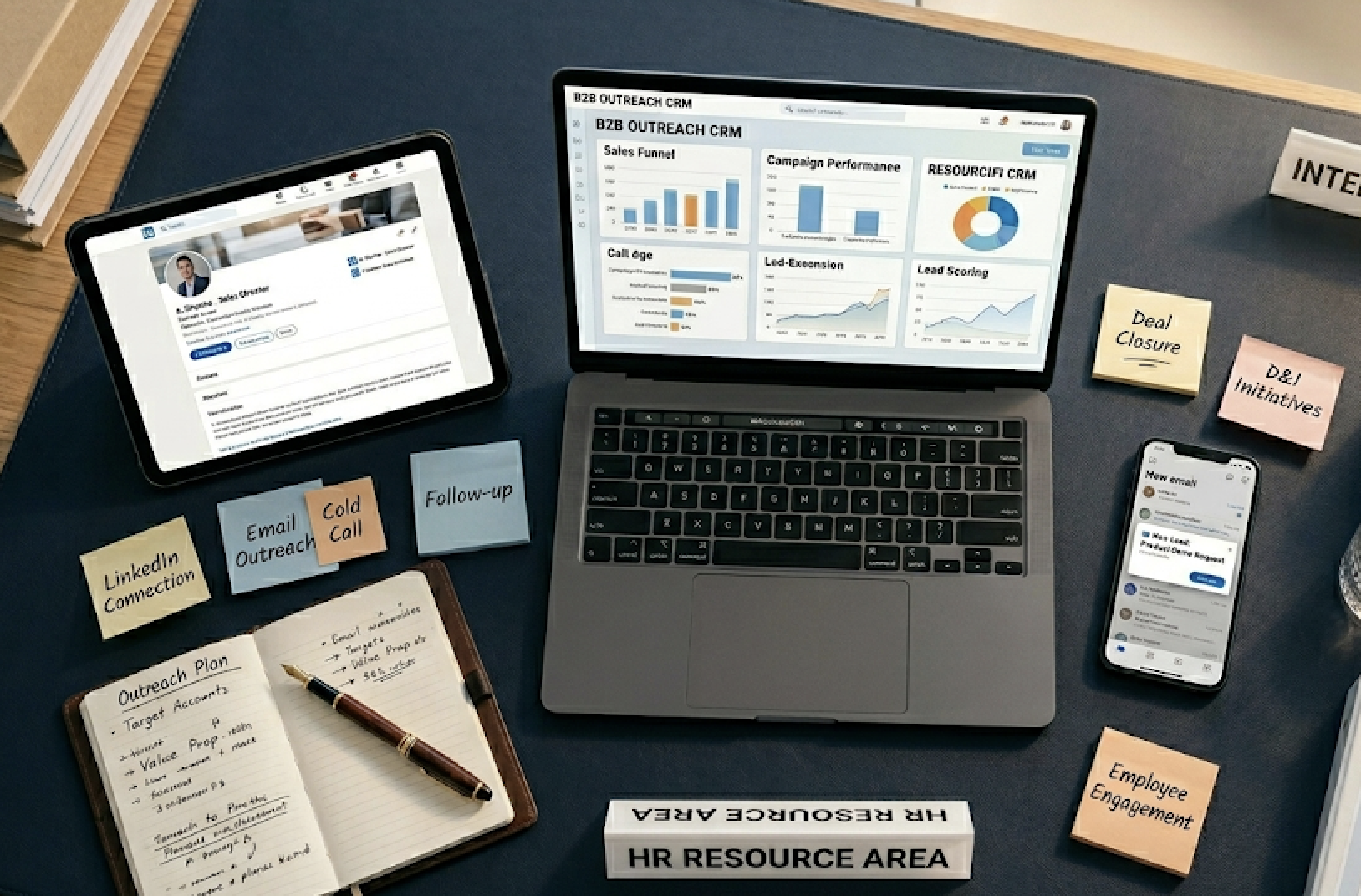
Email, LinkedIn, phone. The whole thing coordinated in one system. Here’s what makes it different.
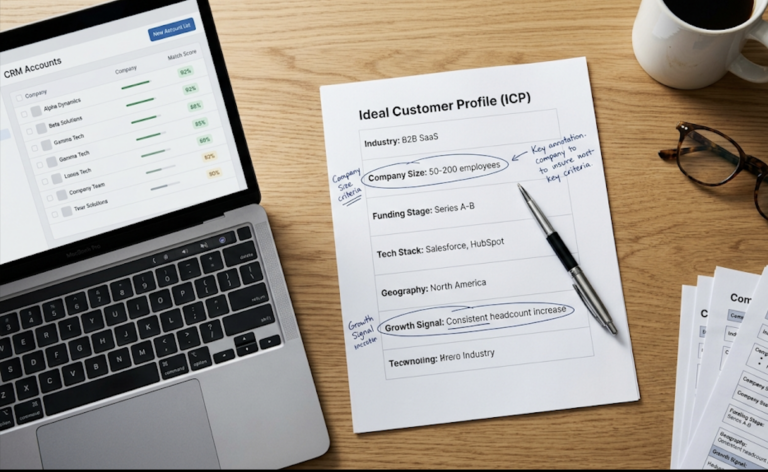
The AI targeting finds your ideal prospects based on signals that actually matter. Not just company size or industry. We look at trigger events, hiring patterns, technology usage, and content engagement. The kind of stuff that tells you this company has a problem right now that your product solves.
Then the hyper-personalization engine crafts messages for each channel that are specific to that prospect.
Not “Hi {name}” personalization. Deep “this email could only have been written for this person” personalization.
At scale. That’s what AI makes possible.
The multi-channel sequencing coordinates everything automatically.
Email goes out on day one. LinkedIn touch on day three. Follow-up email on day five. Phone call on day seven.
Each step adapts based on how the prospect responded to the previous one. Your sales team isn’t juggling tabs and spreadsheets.
The system handles the coordination, and your people focus on having conversations with interested prospects.
We offer this as a managed service through our Done-for-You model, where our SDR team runs the entire outreach operation for you.
If you already have a sales team, you can use the platform directly through our Just the Tools option.
Either way, you get the full multi-channel outreach infrastructure that books qualified meetings. Without spending six months building it yourself.
If You Only Take Away One Thing From This
Stop treating email as your entire outbound sales strategy. It is one channel. An important one. But just one.
The companies winning at B2B lead generation right now are the ones showing up across multiple channels with relevant, personalized messages that build on each other.
They’re using AI targeting to reach the right people.
They’re using hyper-personalization to say the right things.
They’re using outreach automation to coordinate all of it without their sales team losing their minds.
If your sales pipeline is not where it needs to be, and you’re still relying on email alone, that’s probably why.
Not because your emails are bad. Because your prospects need more than one reason to pay attention.
Multi-channel outreach is not a trend. It’s not a buzzword. It is how outbound sales works now.
The sooner you make the switch, the sooner your pipeline starts looking the way you need it to.
If you want help making that switch, or you just want to see what a real multi-channel system looks like, we’d love to show you.
Book a demo. We’ll walk you through how it works for your specific business and industry.